

Issue 84
📅 So. Many. Events! 📅

Hello!
With Spring now undeniably taking hold of forest, fields, and back gardens across the land, our thoughts inevitably turn to… events season! It seems like the majority of the news updates in the issue below relate to get-togethers, workshops, seminars, and full-blown conferences: hopefully you’ll find something to your taste there!
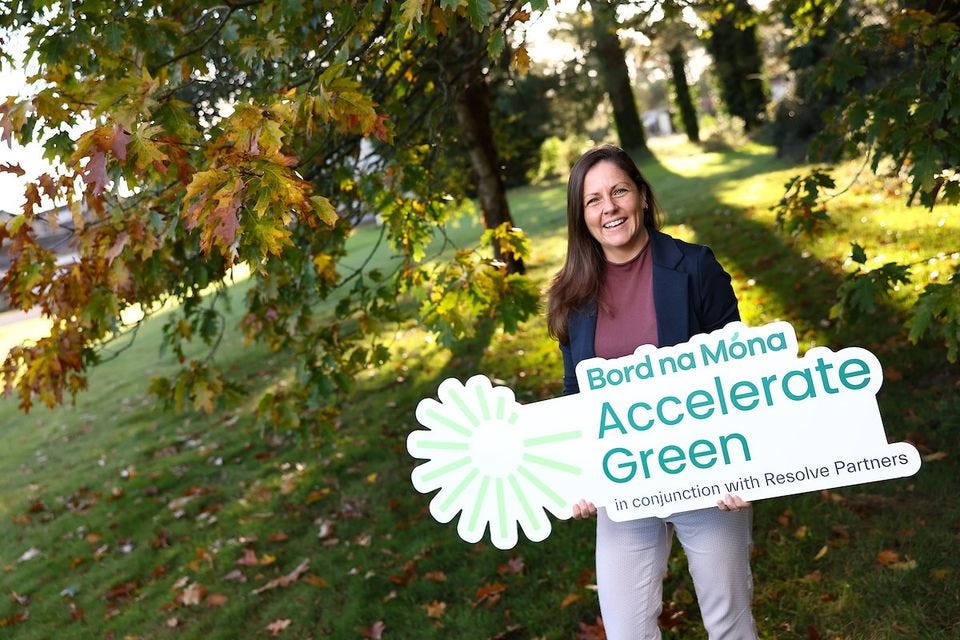
With this in mind, we wanted to get out with an early announcement that Bord na Móna’s Accelerate Green Conference will be returning to the Tullamore Court Hotel on May 15th. This will be the fourth time we’ve helped to deliver the event, preparing the participating companies to take to the stage alongside industry leaders, and share their plans to create world-class climate and biodiversity solutions.
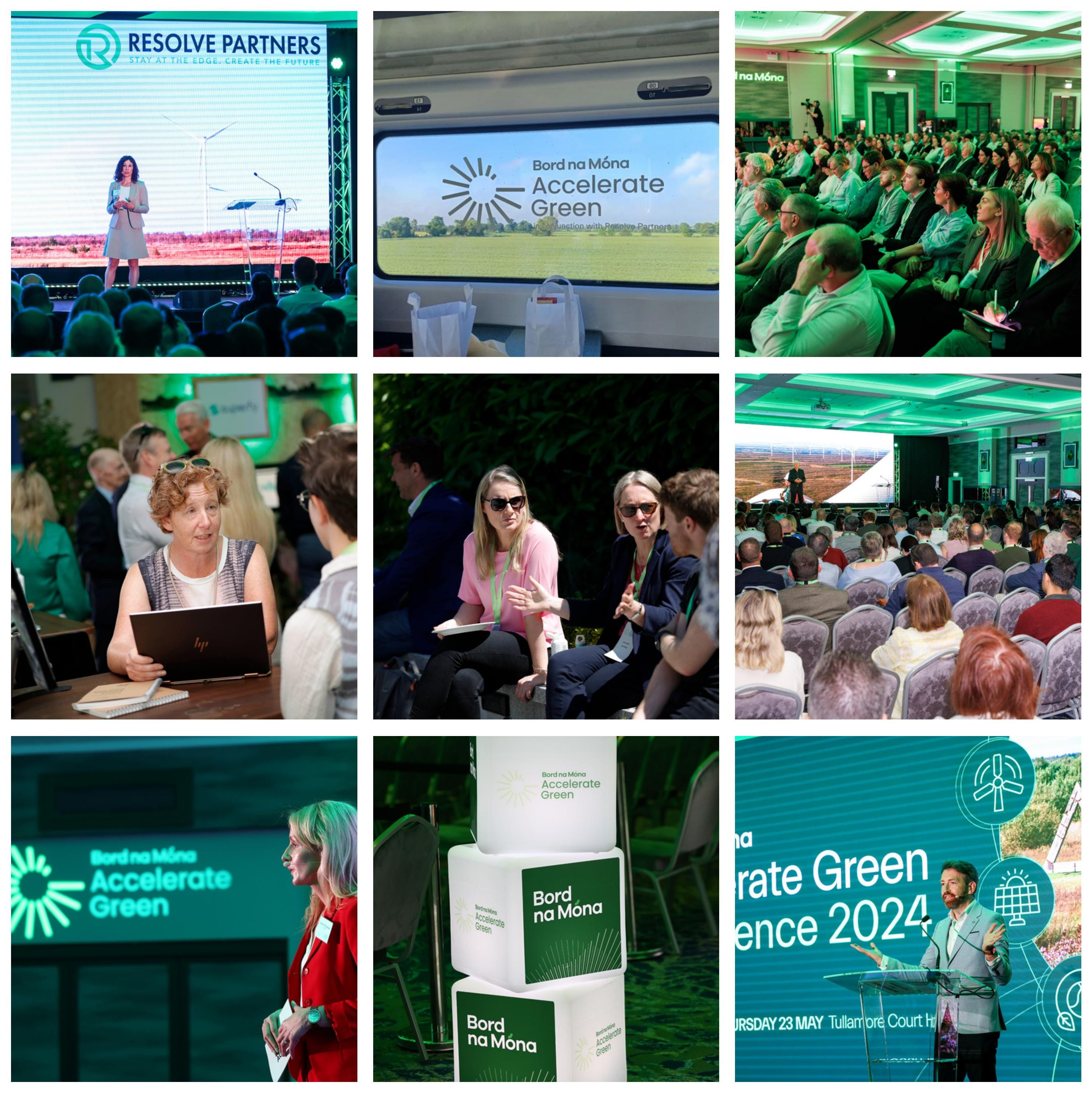
Stay tuned as we share details on the speakers, as well as more information on registration. I hope you’ll be able to join us in Tullamore on May 15th to connect, collaborate, and be part of Ireland’s transition to a low-carbon, regenerative future.

L&G NTR Clean Power (Europe) Fund is adding 211 MW of solar and BESS to its Irish portfolio with the acquisition of Project Monvallet. The deal (representing the fund’s ninth acquisition) includes shovel-ready solar farms in County Louth, with construction set to begin this year, while battery storage will follow in 2026.
Large energy users in Ireland are continuing the push to increase the security and sustainability of their energy supply: Carey Glass—with a formidable 85,000m2 production facility in Nenagh— is doubling down on renewables, signing a CPPA with Erova Energy to provide energy from the nearby Curraghgraigue Wind Farm. This follows its rooftop solar and battery storage moves, showing a clear push to cut emissions and lock in energy stability.
Bord na Móna has confirmed a buyer for the waste management division of their business, with Kerry-based KWD Recycling set to take over. The deal still needs regulatory approval, and the financial terms remain under wraps for the time being.
MML Growth Capital has exited its investment in Natural World Products (NWP), with Ara Partners stepping in as the new majority owner. Belfast-based NWP, Ireland’s largest household organic waste recycler, has diverted 1.5 million tonnes from landfill in five years, turning waste into peat-free compost that boosts soil health and carbon capture.
Accelerate Green portfolio company Go Eve just secured a partnership with Zerova, a global EV charging provider, to scale its DockChain technology worldwide. The Imperial-UCD spinout’s system allows multiple EVs to charge from a single unit, solving a major bottleneck in electric mobility.
And additional EV market moves, as Cork-based EV charging supplier Ohme have agreed a major new deal that see’s them becoming SSE Airtricity’s go-to smart EV home charging partner. Ohme’s chargers will now be recommended to SSE Airtricity’s 750,000+ customers across Ireland, helping EV owners charge up at the cheapest times and maximise the benefit of renewable energy tariffs.
Not everyone’s a winner, unfortunately: Xerotech, the Galway-based EV battery firm, has gone into liquidation just months after seeking a €30M funding round. The company, which had raised €44m from Irish investors, cited a major fire at its plant as the key factor in its collapse. With over 130 employees and a growing customer base, Xerotech had been positioning itself as a leader in industrial EV batteries. Liquidators from EY-Parthenon are now looking for buyers to salvage parts of the business and protect jobs.
Ireland’s next Water Action Plan is in the works, and the government wants public input. The Department of Housing, Local Government and Heritage has kicked off the first of three consultations to shape their strategy through to 2032, with a focus on the timetable and work programme. Stakeholders can weigh in via a questionnaire or general submissions, helping to assess water quality efforts and engagement so far. This is just the start of a three-year process—get your say in before July 25 by emailing rbmp@housing.gov.ie or posting your thoughts to the Water Advisory Unit at the Custom House, Dublin.
Development Perspectives is calling for applications for its 2025 SDG Advocate Training, a seven-month programme designed to equip 23 Active Citizens with the knowledge and skills to drive sustainable change. Through workshops, mentoring, and hands-on community projects, participants will explore global citizenship education, design thinking, and problem-solving—all aligned with the UN Sustainable Development Goals. The training culminates in an interactive exhibition showcasing their impact. Applications close on 10 March.
Global Action Plan (GAP) is on the lookout for passionate educators to join their team and drive real change. They’re hiring two Education Officers—one focused on Global Citizenship Education, the other on Outdoor Education—to inspire schools and communities through impactful learning experiences. If you’re an educator who believes in the power of nature or global awareness to shape a better future, this could be your chance to make a difference.
Let’s start the events run-through with a double-dose of ESG conferences: you can have the ESG Forum on 27 February, or you can plump for the ESG Summit on 16 April. You could also go mad and attend both of them, after which you’ll presumably be very well-informed on ESG, and you’ll hopefully know the difference between a Summit and a Forum. There’s a good strong speaker line-up for both, worth a look.
As interest grows in carbon farming, an upcoming event Ireland can position itself at the forefront of regenerative agriculture. The European Carbon Farming Summit in Dublin (4–6 March) will bring together farmers, policymakers, scientists, and industry leaders to tackle key challenges like monitoring, market incentives, and fair farmer participation.
Ireland’s B Corp community is gathering in Dublin for “B ag Caint – Let’s Talk B Corp!” on 19th March, an afternoon of storytelling, networking, and unflinching conversations about business as a force for good. Hosted by B Lab Ireland and Verve The Live Agency, the event will feature keynote talks, fireside chats, and live art, with insights from B Corps like Bewley’s, Broadlake, and OceanR.
Climate Cocktail Club is back in Dublin on 26th March with “The Birds & The Bees: Biodiversity for Adults”, an evening of bold discussions, science, and storytelling at The Sugar Club. Hosted by broadcaster Anja Murray, the event will unpack the biodiversity crisis, exploring systemic challenges and real-world solutions from finance to policy.
The Irish Times is lining up a heavyweight climate action discussion for “Positive Impacts 2025”. Set for 11 March in Dublin, the series of panels will dig into Ireland’s revised climate policies, business-level action, and whether the SDGs still hold weight in the current climate strategy mix. Speakers from UCC, Arthur Cox, Antaris, and AJ Products will unpack everything from energy security to CSRD reporting. Free event, but registration is required.
Energy Innovators Ireland is hosting a meetup in Dublin on March 11 to talk sustainable energy and new tech. Agenda/speakers TBC as of time of going to press, but expect a mix of professionals and the energy-curious looking to push renewables forward.
The SEAI Energy Show is back at the RDS on March 26-27, offering businesses a front-row seat to the latest in sustainable energy solutions. Expect expert talks, live demos, and the ‘Product of the Show’ awards, showcasing cutting-edge innovations. Whether you're looking to cut energy costs or explore new tech, it's a prime networking opportunity. Free tickets available now.
Last one: InterTradeIreland, in partnership with the Department of Agriculture, Food and the Marine, and the Department of Agriculture, Environment and Rural Affairs in Northern Ireland, is hosting an event for innovators and businesses interested in advancing competitive circular bio-based industries. Taking place on Feb 28, the event is centred around the Circular Bio-based Europe Joint Undertaking (CBE JU), a €2Bn research and innovation fund; there’s also information on bio-based companies can access support under the Disruptive Technologies Innovation Fund, and the new Shared Island Sustainability Capital Grant
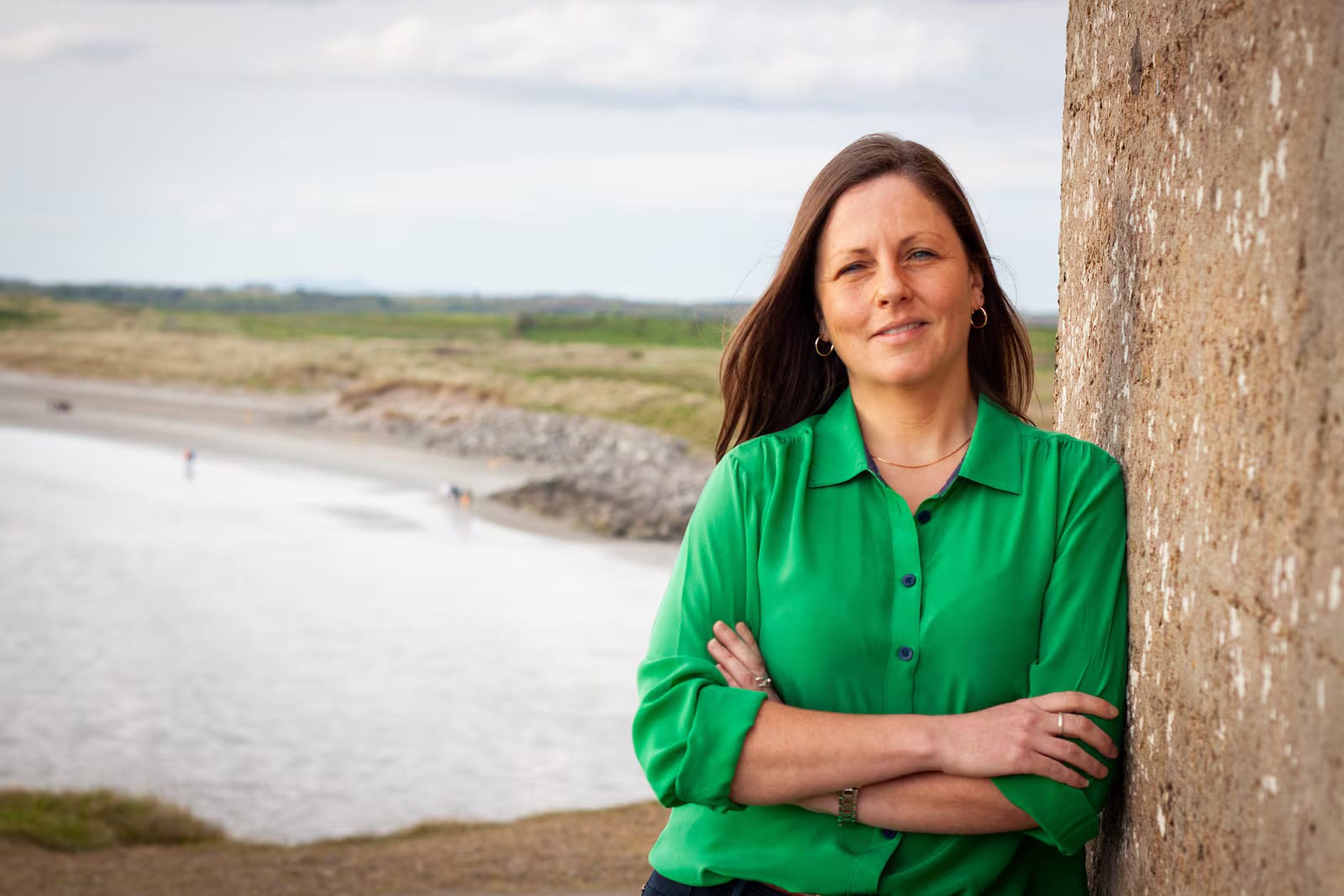
To close out the issue, it's time for "Three, Sixty", where we pose three questions on the theme of sustainability to an impact entrepreneur or innovator, to get a better understanding in sixty seconds of how they're working to achieve the SDG targets. For Issue 84, I’m delighted to welcome Sarah Cosgrove, CEO of Restore Innovation, another one of the participants in Accelerate Green Start 2024 (Spring Cohort).
On a personal level, what impacts of the climate/biodiversity crisis are you most concerned about?
The degradation of marine life and it’s knock-on effects. The marine ecosystem is one which we cannot easily assess damage to as we only have an easy visual of its surface, thus it is one that can unfortunately be misunderstood and at times, overlooked compared to our terrestrial landscape.
During my time researching various human-induced impacts on our coastal and offshore systems, from excessive land run-off causing localised harmful algal blooms to the determinantal response efforts of oil spills in areas as expansive as the Gulf of Mexico, I can say it is a system that is never easily predicted or the impacts easily quantifiable!
What concerns me most is the lack of knowledge and insight we have on ocean biodiversity to make informed decisions. I hope in time we can prioritise the need for collaborative long-term data collection efforts to establish patterns which can better guide the planning of our ocean space.
Our oceans are a powerful resource to help tackle the climate crisis through the deployment of renewable energy infrastructure, and I truly believe establishment of these operations can exist in harmony with marine biodiversity, but only if planned for correctly with a data-driven, ecosystem based approach. There is huge opportunity here, but it needs to be approached with consideration of the ocean’s incredibly dynamic nature and the diverse range of species and habitats this environment supports, many of which are gaining increasing levels of protection.
Which of the UN SDG’s was Restore Innovation established to address?
Restore Innovation addresses UN SDG 14 – Life below water. We founded Restore to support the sustainable use of our oceans for renewable energy development while identifying opportunities for ecosystem restoration and biodiversity enhancement as an integral part of the process.
The ocean is the world’s largest ecosystem, representing 99 percent of the living space on the planet by volume. Although there is increasing awareness towards the importance of protecting the ocean space and increasing funding being made available for conservation initiatives, the current efforts are not yet meeting the urgent need to safeguard this powerful, yet fragile, resource. To date, we have focused primarily on mitigating impacts but it’s time we start looking beyond mitigation to enhancement opportunities and foster ecological synergies that deliver net-positive outcomes for marine ecosystems.
Taking an offshore wind farm as an example, there is great opportunity within the full red-line boundary of the site from the intertidal zone to the offshore space for the integration of Nature-Inclusive Design (NID) solutions. We have seen the success of such solutions at offshore sites including the colonisation of wind turbine foundations creating artificial reef habitats and innovative technologies such as the ‘Fish hotel’ (!), providing shelter and safe foraging opportunities for juvenile fish populations. In combination with reduced fishing pressure in the area, the carefully planned integration of NID solutions at a site can create a natural refuge for marine life to flourish.
How Does Restore Innovation’s Business Model Enable a Transition to a Sustainable Future?
Restore Innovations envisions a future where offshore wind development and marine biodiversity thrive together. By pioneering data-driven solutions, we aim to empower developers to seamlessly plan for the integration of NID solutions into their projects –protecting and enhancing local biodiversity, ensuring regulatory compliance and achieving long-term sustainability goals.
How do we do this? Using multiple marine data sources, Restore’s proprietary spatial planning software carries out a site-specific assessment to:
Create modelled scenarios matching an NID solution to site conditions
Assess the viability of a solutions in relation to nearby protected, commercially important and invasive species.
Prioritise biodiversity strategies aligned with regulatory and ecological objectives
Provide real-time insights on local environmental conditions
Our goal is to support offshore developers in their early-stage decision making around NID planning and build a biodiversity-focused planning portfolio while ensuring compliance with the Corporate Sustainability Reporting Directive (CSRD) and future legislation. Unlike more traditional consultancy services producing static outputs, Restore’s interactive platform allows developers to stay engaged with the latest developments in NID technology, regulatory changes and compliance risks, offering adaptive recommendations to optimise environmental outcomes throughout the project’s lifecycle.
We will feel we have achieved our mission if we can help support the protection of marine biodiversity alongside the meeting of ambitious renewable sustainable energy targets and steer the global shift toward sustainable, nature-positive, and compliant offshore development - where conservation and clean energy go hand in hand.