SDG Alpha - Issue 10

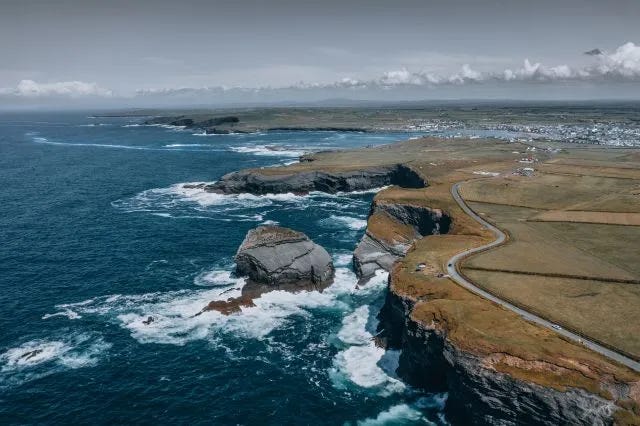
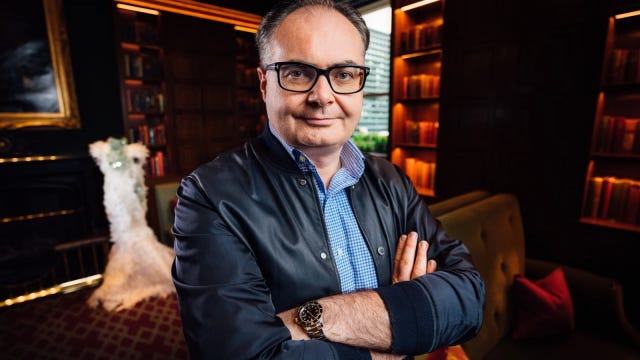
Photo by Luciann Photography
Hello friend, and welcome to SDG Alpha, a fortnightly newsletter about Innovation, Impact Investing, and Sustainability in Ireland.
If you’re not a subscriber and you want to keep getting the latest news and analysis delivered straight to your inbox every second Friday, sign up here.
Thank you for reading; now, on with the show!
A quick programming note before we begin - by the time you've finished read this issue of SDG Alpha, I will have (hopefully) packed my tent, yoga mat, and (optimistically) sunscreen in advance of heading home to my native West Clare for a few weeks of downtime. As a result, there will be a brief hiatus in these updates, but we'll be back, full of beans, with another issue on September 3rd.
This week, I was privileged to participate as a Virtual Judge for an international ideas competition to help young people develop world-changing business solutions to social and environmental problems. The Social Shifters Global Innovation Challenge is a contest to find early-stage ideas and solutions that will contribute to the SDGs, and was open to participants between 18-30, from all parts of the world. Social Shifters (who are themselves a social enterprise providing tools and community to young impact innovators) received over 2,000 applications for the contest, of which I reviewed a batch of about 30.
It's a surreal, and humbling, experience to sit at the pinnacle of privilege (male/white/educated/suburban) and cast a critical eye over the work of a group of change-makers, who seek to innovate and make a positive impact from the heart of the communities they are rooted in. The communities these social entrepreneurs come from, 90%+ of which are located in the Global South, are at greatest environmental and societal risk from the climate crisis, and have already suffered terrible loss and devastation. Watching the videos, hearing the stories, I had a chance to learn more about these problems, and being better informed, have a chance to look at some biases and assumptions I had about these issues - a learning opportunity that I'm very grateful for.
That said, my role as Virtual Judge was to be, well... judgy. I recommended about a third of the projects for progression, which is a pretty typical strike rate. Making an innovation project stand-out from the crowd is critical - there's so many ideas, and finite support resources available. Reading the applications, I could see that there are a couple of points worth keeping in mind as you pitch an impact project, that wouldn't normally crop up when pitching a "regular" startup, and I wanted to share them here.
You need storytelling that comes from the community that you're looking to support. If no member of the founding team is a member of the impacted community, you have to find a customer voice that speaks to the problem. Now, obviously, highlighting the voice of the customer is something that every innovation project needs to do, but with an impact project it's different. The problems being addressed can make people feel very uncomfortable; an authentic voice speaking from the community will help to prevent your audience from switching off.
You need to understand the impact you're going to make. It's not enough to rattle off a bunch of SDG targets - you must showcase your insights into the underlying problem that shows that change can happen to allow the desired outcome. Using an approach such as Theory of Change (combined with the plain old elbow-grease of actually talking to your customers) is a really good place to start.
You need to talk about the partnerships: SDG 17 (Partnerships for the Goals), is in some way present in every successful impact project. No lone founder, no single startup team, has the capacity or ability to deliver the systemic change needed to address the challenges we face. Understanding that, and speaking to the partnership commitments you have, or your gap/ambition here, is crucial.
Hats off to the team at Social Shifters; they're doing great work, and hopefully we'll see some strong projects emerging from the Challenge!
Here's the round-up for Issue 10:
Two pieces linked to transport/mobility: Ireland has some ambitious targets in place regarding the adoption of electric vehicles, but has been lacking a cohesive strategy around charging infrastructure. It was good to see the announcement earlier this week that a new set of Regulations have been published to address this, particularly looking at the requirements for charging points in new builds, and renovation works. Separately, Luna Systems, the Irish micromobility solutions provider, announced a partnership with LA-based JUMPWatts: the two companies have really complementary value propositions, and together they appear to have a compelling solution to the challenges that are preventing e-Scooters from being more widely adopted in Smart City projects.
Following on from this, Enterprise Ireland announced a new €10M grant fund targeting transformation projects supporting regional economies; the funds will be issued to non-profit organisations that are actively working to adapt to the changed circumstances brought about by Covid-19, Brexit, as well as the need for a greener economy. Closing date for applications is September 8th.
Bord Iascaigh Mhara and Hatch (a venture fund specialising on aquaculture innovation) are seeking applications for a series of innovation workshops to support early-stage projects that revolutionise the way we produce seafood. The workshops provide sectoral expertise, and validation of each project's technological and commercial innovation. If you're a porpoise-driven (🤦♂️) founder, get to work - application deadline is September 10th.
And another support programme for early-stage ventures: CIRCULÉIRE will be running their second New Ventures Innovation & Mentoring Program, to help ventures which are building solutions that can enable the transition to a low-carbon, circular economy. The call is targeting projects that are close to market, or recently launched - it's a good support programme, and there's €5,000 equity-free funding available. Application deadline is August 20th.
Quite a bit of activity around academic and commercial partnerships announced in the last two weeks: Irish renewable energy firm DP Energy announced a major tidal energy project in Nova Scotia, partnering with Japanese companies K Line, and Chubu Electrical Power - the Bay of Fundy has some of the most challenging tidal conditions in the world, so it's a great step towards seeing this kind of technology off the West coast of Ireland (did I mention I'm going on holidays there? 🌊); Tapas, a research project from NUI Galway, has been awarded €1M under the SFI "AI for Societal Good" Innovation Challenge - it uses a combination of AI and satellite imagery to measure climate change adaptation in agricultural ecosystems; there's been more activity in the Irish solar energy market, with Dublin-based Power Capital acquiring a majority stake in the portfolio of Terra Nova, a UCD spin-out developing Irish solar farms; and finally, agritech specialist Devenish have teamed-up with Accenture to launch Agrinewal, a solution that gives farmers tools to help reduce emissions and sequester carbon on their farms.
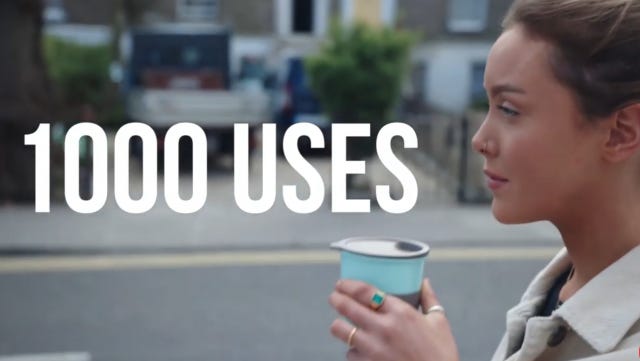
Here's your chance to support an Irish startup on a mission to reduce the amount of waste going to landfill: 2GoCup are running a crowdfunding campaign to power their scale-up. They've developed a twist on the approach to "deposit return schemes", and are seeing significant adoption by massive catering companies and indie baristas alike. The campaign ends in 7 days, so check it out and do help if you can!
Two sustainability focused funds announced lists of successful awardees in the last few days: check out the 34 projects supported by Rethink Ireland's Social Enterprise Development Fund 2021, and the 14 projects receiving grants from the Government's Creative Climate Action Fund.
If you need even more environmental news and stories in your life, well worth checking out GLAS Magazine - it's a new publication, covering lifestyle, policy, and science from an ecological/environmental perspective. It's light and accessible (and very, very Cork so far) - well worth a look.
Last item! A podcast recommendation to close out with; listen to the story of HomeTree, as told by the excellent Conversations with Irish Doctors for the Environment. Hometree are a re-wilding and afforestation charity based in West Clare, and this episode talks about their unusual approach to the "lines of pines", or the vast swathes of our landscape given over to non-native tree farms. Also, DID I MENTION I'M GOING ON HOLIDAYS TO CLARE? Here's your chance to tune out, and share my experience of listening to rain pouring down on the Irish countryside!
To close out the issue, it's time for "Three, Sixty", where we pose three questions on the theme of sustainability to an impact entrepreneur or innovator, to get a better understanding in sixty seconds of how they're working to achieve the SDG targets. I'm delighted to welcome Troy Armour, founder of Junk Kouture, who were featured in this newsletter recently following their announcement of seed funding. Over to Troy...
On a personal level, what impacts of the climate crisis are you most concerned about?
The impacts of the climate crisis that have hit me is our own level of consumerism - this need that we have to buy and consume at feverish levels. There are many things driving this - myself as an entrepreneur - to be successful we have to drive business growth - aka more consumerism - it’s a never-ending cycle. In our house we have recently tried to have plastic free Christmas - it’s mad how much toys and silly things we would buy made from plastic just because we could - most of them are unconscious decisions - impulse buys. It’s going to be a challenge to get the business world onside with this as any business model with less consumerism means less growth.
Which of the UN SDGs did you start Junk Kouture to address?
When JK started originally it wasn’t about the SDGs for me - it was about creating a fun platform for creative young people - as we grew over the years we directly support three, and indirectly a further 9. I started to hone in on the elements of Junk Kouture that spoke to me personally - it was the education that it delivered. It was the self-education - where young people learned about themselves and their environment through the creative challenge of using trash to make wearable fashion. Thus, the SDG that really stood out to me was Quality Education as JK supports young adults to explore creative and technical skills, exposing them to a broader set of skillsets. This can expand the possibility of their future employment options and empower them to explore more entrepreneurial endeavours.
Good Health & Well-being is a second SDG that we’re passionate about addressing. JK offers a creative community for young adults to come together through a shared passion for creative expression and explorative design. Creating a space for young adults to feel a sense of belonging in their chosen expressive field greatly supports mental health and well-being for teenagers otherwise on the fringes of their peer groups.
Thirdly, SDG 12, Responsible Consumption and Production, as JK encourages young adults to challenge the traditional 'take-make-dispose' linear model of fashion production. By turning "waste" back into creation of wearable fashion, JK is fostering a new generation of circular engineers.
Through the JK process, participants become more aware of sustainable development and humans role in destroying, or living in harmony with nature.
How does your business model enable the transition to a low carbon, or more sustainable future?
Our business model is about creating people and planet transformation - we create circular engineers - young people who see trash as a raw material - who will find new ways to reuse this material rather than dump it and make something again from scratch. For example our alumni participant Katie Brill who made a leather like material from orange peel - it’s thinking like this that will create the solutions needed to help us build a more sustainable future.
And, that's a wrap for Issue 10 of SDG Alpha! Hope you found it useful, and if you did, please share :)
Stay safe - and see you all in September!
twitter | linkedin | resolve partners